


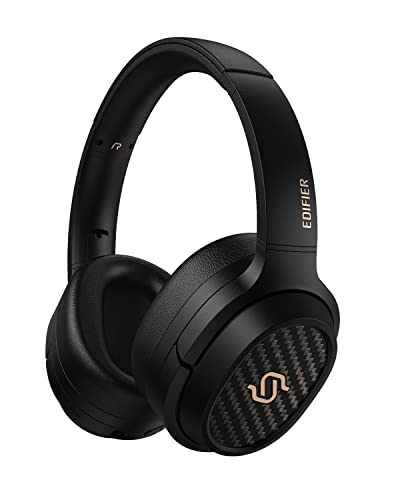
 What to Look For in Bluetooth Headphones
Bluetooth headphones use wireless technology that utilizes low power radio transmission signals to transmit audio. These signals are converted to analog audio using the built-in DACs and then sent to the drivers of the headphones for output as sound waves.
Before you can connect your Bluetooth headphones jbl (adoo.Fr@srv5.Cineteck.Net) they must be "paired". The process of pairing creates an information link between the headset and the parent device.
Audio Quality
Bluetooth utilizes radio waves with a short range to transmit audio data, eliminating the necessity for wires. Its range is up to 30 feet, which is ideal for use in your home. It also prevents your music from cutting out when you move between rooms. It also helps to keep interference from other Bluetooth-enabled devices to the minimum, ensuring that your headphones aren't overloaded with other sounds which can hinder your enjoyment of the music.
However, Bluetooth was not originally designed to be used for audio entertainment. It has a limited bandwidth that makes it necessary to apply data compression to music files that are transmitted wirelessly. This may be fine for phone calls but it affects the quality of your audio experience.
Some headphones are equipped with aptX audio codecs or aptX HD, which eliminate the necessity of compression. This ensures a more precise and natural representation of the audio file. It is now possible to listen to high-quality music over Bluetooth. These superior quality Bluetooth codecs are supported by a range of audio applications and music services, including Spotify and Apple Music.
The most reliable Bluetooth headphones with bluetooth will have at the very least a basic audio codec like SBC however, some will have more advanced audio codecs that ensure compatibility with all of your listening needs. If you plan to use your headphones to stream videos from YouTube or Netflix select headphones that support aptX Low Latency or aptXHD. This will allow the audio and video to sync, providing a more immersive listening experience.
The Sony WH1000XM5 headphones are among the top Bluetooth headphones that provide excellent sound quality. They are a worthy winner of our Product of the Year award and offer a high-quality experience that rivals cannot match. The noise cancellation is superior and the app experience is superb. Bowers & Wilkins' Px7 S2 headphones provide superior audio experience and a better design if you're willing to pay more.
Easy of Use
Wireless headphones are an excellent alternative to wired headphones. Bluetooth is a well-established wireless technology that makes use of radio waves with a short range to connect devices, such as headphones and music players. Bluetooth requires that a transmitter and receiver be connected to an audio source. The source encodes and transmits the audio signal to a Bluetooth chip which then broadcasts it through radio waves to the headphones.
The headphones' Bluetooth receiver decodes the received signal and transforms it into an analog audio signal that can be listened to. Then, the headphones' audio amplifier converts the signal to a high enough voltage to drive its speakers, thus producing sound. Most headphones that work over ear bluetooth headphones Bluetooth will feature digital-to-analog converters (DACs) to ensure high-quality audio playback.
The most modern Bluetooth headphones also have an amplifier for headphones built-in to boost the output power for louder music playback and to reduce distortion levels. Furthermore, many headphones include a built-in microphone that can be used for hands-free calls, and some models will also include the Apple-exclusive codec, aptX to provide better audio quality when streaming videos or podcasts.
Some wireless headphones come with internal storage for data, allowing users to store a couple of gigabytes of music to playback with ease without the need for an external audio device or a connection. This is great for people who enjoy listening to a specific playlist or want to work without a connection when out. However, updating and transferring songs stored on internal storage will require the use of an internet connection, and if your musical tastes change, you'll have to change the music.
The Bowers & Wilkins Px7 S2 headphones have been upgraded from their predecessors in 2020 and are now more premium than ever, but they still offer a very comfortable design for long listening sessions, and a neutral and engaging sound that is distinctive in a class. They come with a long battery life, fast charging and support aptX Adaptive or aptX HD codecs for Headphones Jbl audiophiles who have sources that allow them. They're also affordable and have a minimalist design.
Long Battery Life
Long battery life is among the most important features to look out for when purchasing headphones. You want a pair that can keep you entertained for the length of a flight, or your daily commute without needing to recharge it.
Most Bluetooth headsets are built to meet the promise of. In actual fact, top picks from our reviews like the Cleer Enduro ANC and the Sennheiser Momentum 4 Wireless headphones offer up to 60 hours of playback per charge. In our testing the headphones proved to be a great price, with top audio quality and a lengthy list of features that are desirable at a very reasonable price.
The average Bluetooth headphone can play for up to 8 hours with a single charge. If you're seeking to extend the number of hours you can listen to music before having to plug them back in it is recommended to choose one that uses high-efficiency charging technology. These kinds of headsets typically charge in about 1.5 to 2 hours, while conventional headsets can take up to three to four times longer for the same amount of juice.
Additionally, the type of Bluetooth headphone you buy could also make a huge difference in the life of your battery. The two most common kinds of Bluetooth headphone are Class 2 and Class 1 headsets. Class 2 headsets have an maximum power of 2.5 milliwatts, whereas Class 1 headsets can use up to 100mW.
Another way to save on battery life is by selecting a pair Bluetooth headsets that are compatible with your mobile device. There are earphones headphones that are compatible with all smartphones or tablets as well as computers. You can verify compatibility on the manufacturer's website or checking your device's documentation for details on how to do this.
In the early days of Bluetooth headphones, connections would drop out constantly, pairing was a hassle and audio quality was the musical equivalent of the old tin bottle phones you used to make when you were a child. Bluetooth technology has advanced and the wireless headsets give you a superior audio experience, with a range of features that make your tablet or phone even more practical.
Noise Cancellation
Look for headphones with noise cancelling capabilities. The top noise cancelling headphones significantly reduce background noise and allow you to concentrate on your audio without being distracted by the sounds around you. Noise cancelling technology is based on the concept of acoustic separation. This is the use of a physical barrier like headsets or ear cups to block out noise from outside. The most advanced headsets use multiple microphones to isolate sound from the listener's ears and head which results in superior audio quality.
The majority of modern headphones and headsets feature noise cancelling, with the ability to regulate the amount of noise cancellation using built-in controls or an app. Many headsets and headphones allow you to hear ambient sounds, which can be beneficial for commutes to work or working in the office.
The Headphone Audio Profile (HSP) is used to transform the digital audio signal transmitted by the Bluetooth transmitter into analog. The HSP codec encrypts a digital signal to an A2DP format. It is then modulated on the Bluetooth UHF carrier, and wirelessly transmitted to the headset's receiver. The Bluetooth receiver detects the modulation and uses an integrated DAC to convert the A2DP signal back to an analog audio signal, which is then transmitted to the headphones' drivers.
The main difference among RF and BT headphones is that RF signals can be interfered with by other electromagnetic transmissions while BT uses specific frequencies for Bluetooth. The latest Bluetooth 5.0 protocol has minimized the impact of interference however older models may be affected by other electronic devices that generate electromagnetic signals within the same frequency range.
Bluetooth-enabled headsets come in a variety of sizes and styles, ranging from circumaural and over-ear to supra-aural and on-ear. Some headsets are designed to be discrete like the Plantronics Discovery 925 and Jawbone Icon XR, while others are more flamboyant, such as the Bose QuietComfort 35 II or TaoTronics soundLiberty 79. The size and shape can be determined by the capabilities of a headset. Smaller models are more portable and comfortable for long-term use.